
The $638 Million Wake-Up Call: Rising Fraud in Canada
In today’s digital-first economy, rising fraud in Canada is threatening trust like never before. Right now, fraudsters are exploiting this. Picture this: your team has just onboarded a promising new client. Everything checks out – until weeks later, you discover that client never existed. The identity was synthetic. The data was fake. The damage? Real and expensive. This isn’t fiction. It’s the new reality facing Canadian businesses, where fraud risk is exploding as digital interactions increase. According to Statistics Canada, reported fraud cases jumped 12% in 2023 alone. Over the past decade, they’ve nearly doubled.
But here’s the catch: only 5–10% of fraud is ever reported – meaning what we see is just the tip of the iceberg.
The cost?
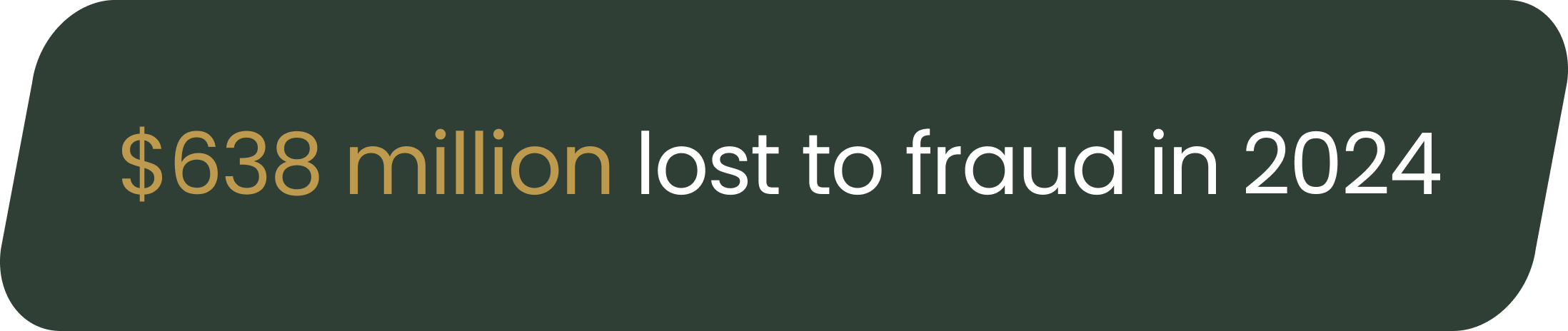
Due to rising fraud in Canada, Canadians lost $638 million in 2024 – a record-breaking number (Canadian Anti-Fraud Centre). And for businesses, it’s even steeper: the average cost of fraud for a large Canadian enterprise exceeds $13 million annually (ACFE, 2024). Despite this, 41% of North American merchants still rely on manual, outdated fraud prevention processes instead of using automated, AI-powered systems (LexisNexis Risk Solutions, 2023). Now is the time to turn risk into competitive advantage – and invest in smarter, adaptive fraud prevention technology before it costs you more.
The Hidden Cost of Every Fraud Attempt
Every fraud attempt, whether successful or not, leaves a mark. It forces your team to rerun checks, reroute approvals, and rebuild customer confidence. Worse, it chips away at the one thing you can’t afford to lose: consumer trust. Behavioral science calls this the “trust deficit effect.” Once trust is breached, it takes significantly more effort and time to restore than to build. And consumers don’t wait. If your process feels risky, complex, or outdated, they’ll walk – often straight into the arms of your competitors. Rebuilding that trust starts with transparency. Proactively informing affected users, owning the incident, and clearly outlining what changes you’ve made can help restore credibility. Reinforce safety with trust signals – like visible fraud controls, liveness detection, and real-time support – and simplify the user experience. When customers feel protected and understood, trust can be repaired over time.
Why Traditional Tools Are Failing
So why is this happening? Because fraud has evolved and many defenses haven’t. Yesterday’s protection tools; passwords, security questions, even two-factor authentication – were designed for a different era. Today’s attacks are powered by AI, deepfakes, and voice cloning. Among the most dangerous new threats:
- Synthetic identity fraud, where real and fake data are blended to create “new” individuals who can pass traditional KYC checks (McKinsey).
- Phishing scams enhanced by generative AI, making emails indistinguishable from legitimate communication.
- Deepfakes and injected media, used to impersonate executives or bypass biometric verification.
- Voice-based social engineering, where cloned voices manipulate customer service agents or verification systems.
These aren’t anomalies – they’re trends. And they’re costing Canadian businesses time, money, and reputation.
Rethinking the Response: From Reactive to Predictive
To stay ahead, organizations must shift from detection to prevention – and that starts with smarter systems. At EIS, we’ve designed our SmarterProcessing™ platform to meet today’s most pressing fraud challenges. Built on 40+ years of experience helping Canadian enterprises with onboarding, verification, and compliance, it integrates best-in-class tools that work together – seamlessly and intelligently.
Jumio uses AI to verify ID documents, detect liveness, and cross-reference user data with over 500+ global sources. It performs biometric checks in real time, helping catch suspicious behavior the moment it occurs. (Jumio 2024 Study) Clearspeed analyzes voice responses to detect risk signals across 60+ languages – in seconds. Originally developed for U.S. military screening, it reduces case review time by 95% and shrinks investigation loads by 74% without collecting invasive biometric data. (Clearspeed) Together, these tools give Canadian businesses:
- Fewer manual reviews
- Faster client onboarding
- Stronger compliance
- Better fraud defense on day one

Fraud Is Evolving. So Must We.
The scariest part? Fraudsters are innovating faster than most companies are reacting.
But that also means there’s an opportunity. Investing in modern fraud mitigation isn’t just a cost- it’s a competitive advantage. It tells your clients that you value their security. It signals to partners that you take compliance seriously. And it shows leadership that you’re future-ready. In a world where trust is constantly under attack, your protection can become your brand. Let’s stay ahead – together.
Association of Certified Fraud Examiners. (2024). Report to the Nations: 2024 Global Study on Occupational Fraud and Abuse. Association of Certified Fraud Examiners. (2024). Report to the Nations: 2024 Global Study on Occupational Fraud and Abuse. Fraud Is Evolving. So Must We.
Canadian Anti-Fraud Centre. (2024). Fraud statistics. Association of Certified Fraud Examiners. (2024). Report to the Nations: 2024 Global Study on Occupational Fraud and Abuse. Fraud Is Evolving. So Must We.
Clearspeed. (n.d.). Technology and resources. Association of Certified Fraud Examiners. (2024). Report to the Nations: 2024 Global Study on Occupational Fraud and Abuse. Fraud Is Evolving. So Must We.
Forbes Technology Council. (2023, October 12). Voice cloning and cybersecurity. Forbes. Association of Certified Fraud Examiners. (2024). Report to the Nations: 2024 Global Study on Occupational Fraud and Abuse. Fraud Is Evolving. So Must We.
Gligorijevic, B., & Le Mens, G. (2021). Rebuilding trust in the digital age. Harvard Business Review. Association of Certified Fraud Examiners. (2024). Report to the Nations: 2024 Global Study on Occupational Fraud and Abuse. Fraud Is Evolving. So Must We.
Jumio. (2024). Online identity study. Association of Certified Fraud Examiners. (2024). Report to the Nations: 2024 Global Study on Occupational Fraud and Abuse. Fraud Is Evolving. So Must We.
Jumio. (n.d.). Biometric verification and liveness detection overview. Association of Certified Fraud Examiners. (2024). Report to the Nations: 2024 Global Study on Occupational Fraud and Abuse. Fraud Is Evolving. So Must We.
LexisNexis Risk Solutions. (2023). True Cost of Fraud™ Study: North America. Association of Certified Fraud Examiners. (2024). Report to the Nations: 2024 Global Study on Occupational Fraud and Abuse. Fraud Is Evolving. So Must We.
McKinsey & Company. (n.d.). Synthetic identity fraud: A growing risk. Association of Certified Fraud Examiners. (2024). Report to the Nations: 2024 Global Study on Occupational Fraud and Abuse. Fraud Is Evolving. So Must We.
Statistics Canada. (2023). Police-reported crime statistics in Canada. Association of Certified Fraud Examiners. (2024). Report to the Nations: 2024 Global Study on Occupational Fraud and Abuse. Fraud Is Evolving. So Must We.